Notes on desassossego

Dear reader,
Nowadays, I begin every morning by mulling over passages from Pessoa’s ‘The Book of Disquiet’. I don’t know when it became something I do almost every day, and now it has the makings of an irreligious rite. I shall not share where I perform this rite; let us just say that contemplating on all kinds of voids has all sorts of salutary effects.
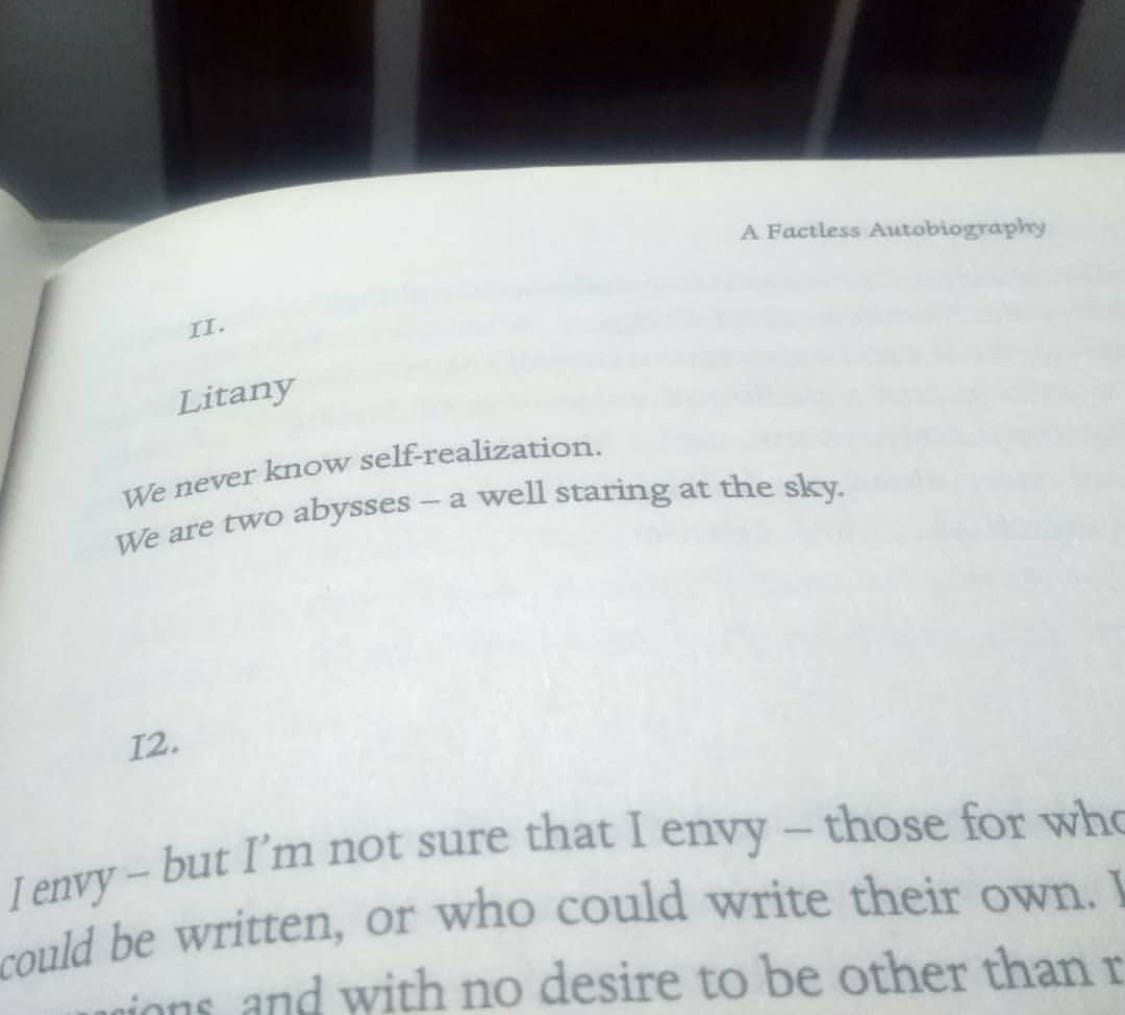
I think Pessoa should have been born in the 80s, and been part of the generation that discovered adulthood with the blog. Then perhaps, he would not have lamented, as he did in one letter to his poet friend: ‘My state of mind compels me to work hard, against my will, on The Book of Disquiet. But it’s all fragments, fragments, fragments.’ In those days of the internet, the blog was fragments, fragments, fragments, saturated with all that animated us, from philosophy to porcelain. It was all fragments, pieces of saturated thought, dripping with all that we felt and did not.
Pessoa never wrote ‘The Book of Disquiet’. He left behind a large trunk of poetry, prose, philosophy, and other texts, written in notebooks, sheets, backs of letters, or paper scraps. He wrote under dozens of names, heteronyms, as he preferred to call them, people (I don’t care for personas) with their own life stories, personalities, and attitudes. Alberto Caeiro. Ricardo Reis. Bernardo Soares. These are just some of those people who inhabited him, and whom he in turn inhabited. One such person, Alvaro de Campos says, ‘Fernando Pessoa, strictly speaking, doesn’t exist.’ So, not only did Pessoa did not write ‘The Book of Disquiet’, he did not exist to begin with. Who am I to argue with Alvaro?
And so, as you sit with the Book of Disquiet, you do not quite know who is it that is talking to you. Is it Caeiro? Reis? The assistant bookkeeper Soares? Then you ask, as the morning lets you breathe thought — don’t all books of ritual have this quality of a palimpsest? It is never about the creator, it is about the slow accretion of faith, fear, and familiarity over time.
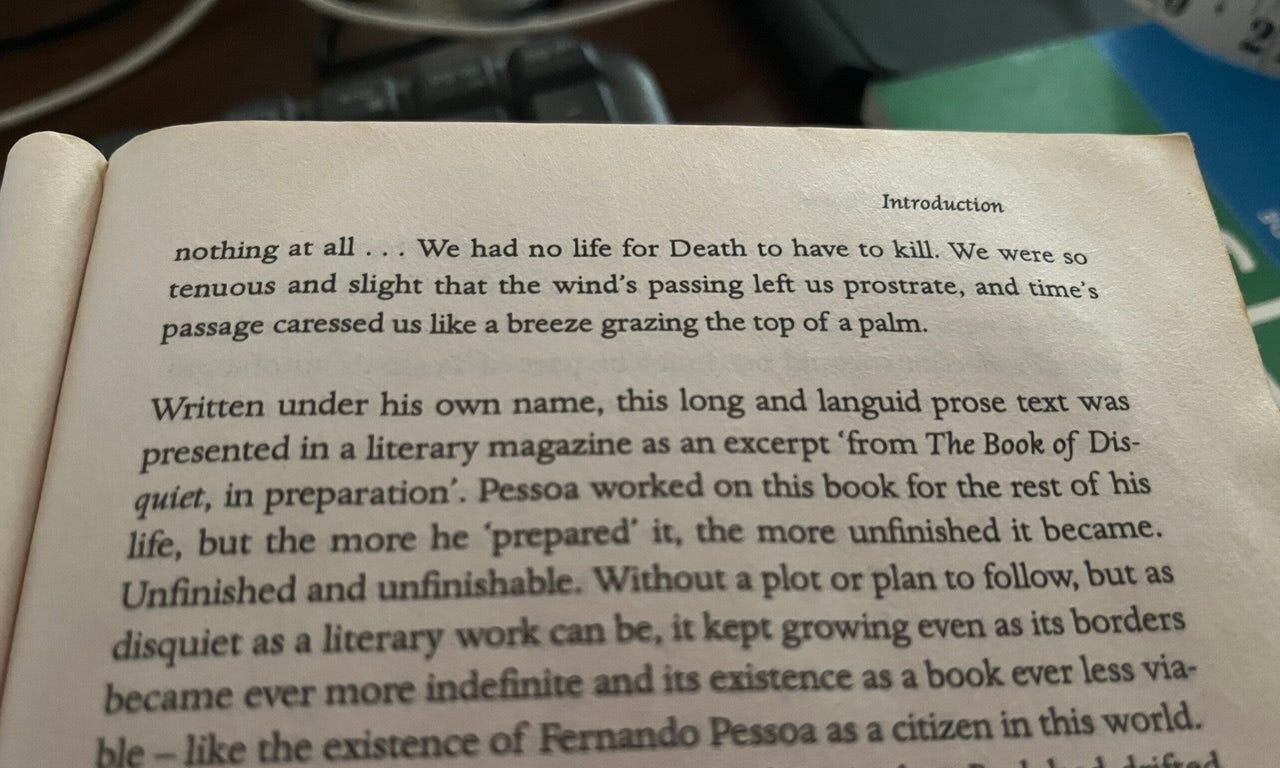
Pessoa worked on the Book for all his life, and the book’s contours resembled that of life itself, a mapless feature. As I think about this, sit with the thought of someone writing, writing, writing, the Book, the life, the time in between, to-do lists flutter in along with the dewy-laden fingers of the morning light coated with birdsong. I gaze at the to-do lists, hovering, waiting to solidify into resolve. I blow a soft column of air, and they rise, freed from care, and float away.
I shall now pause writing and open a page at random. It is, of course, part of the devised rite, revised and redone till it does not feel trite, derivative, but something that’s my own, like a note practised till you let go, not of the note but the practise.
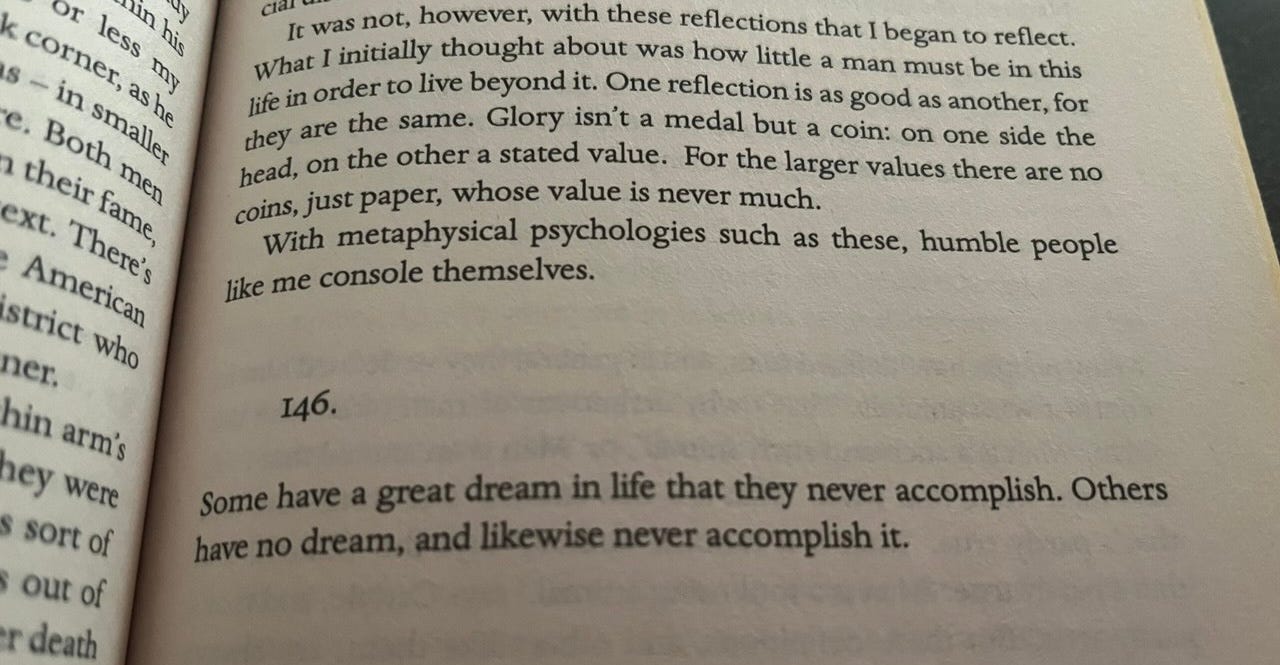
I giggle. We have had this conversation before. It is a thought that has repeated itself so often, in so many different costumes, that it can now go on a t-shirt. Kundera proclaimed with pageantry: the struggle of man against power is the struggle of memory against forgetting’. Whereas, he too faced the unbearable lightness of being, and so what he did not say was that the struggle of man against the void is the struggle of memory against meaning. The void peers between the spaces between words, every pause reminding you of the emptiness of meaning we, humble people like me console themselves with.
Should I open another page at random? I hesitate. It is not a game. It could be a game. It could be a never-ending game, where I end up giggling every single time, instead of writing, instead of willing that the words are what I want them to be. I want that power. I want the shoulder strength to throw the Book away, far away, where it shall not remind me of this empty ritual, this purposeless pursuit of purpose.
One more page.
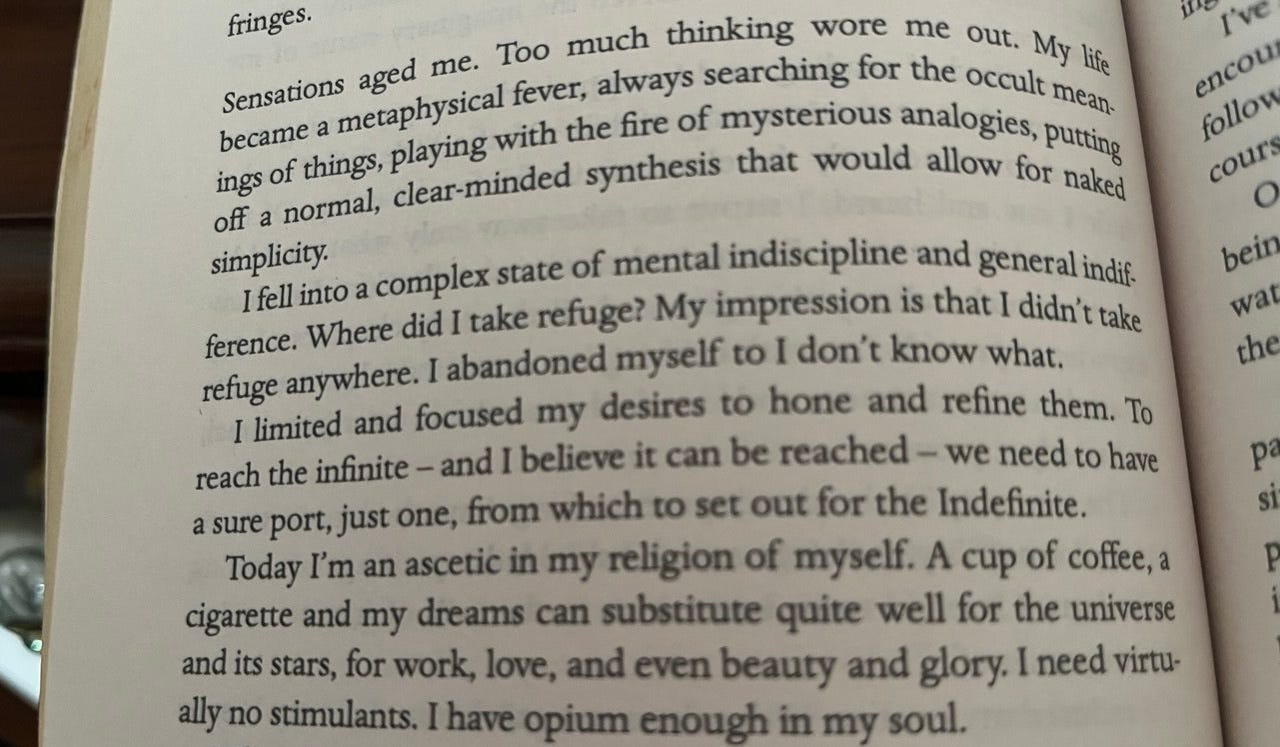
I picked the Book up, the weight of it in the palms assuring in a way its pages never are, and put it away. The birds continue to chirp. I look out for the to-do lists that are never too far away.
—
ps: The first item of my list; the note I made when I began writing that I have to tell you what desassossego means before I send you this missive. It is the portugese word that has been translated to disquiet.
"don’t all books of ritual have this quality of a palimpsest? It is never about the creator, it is about the slow accretion of faith, fear, and familiarity over time." Amazing sentence this is.